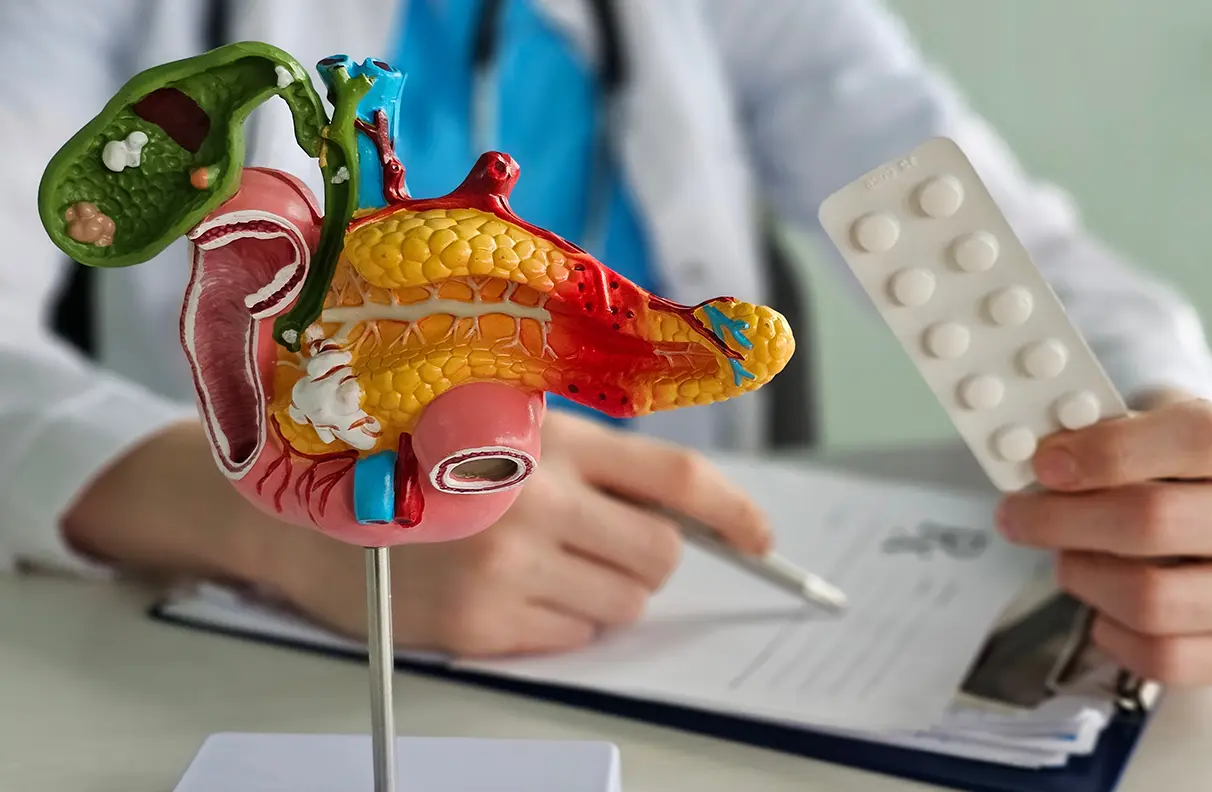
What is Whipple Surgery and Why Does Preparation Matter?
Whipple Surgery involves removing the head of the pancreas, part of the small intestine (duodenum), the
gallbladder, and a portion of the bile duct. In some cases, a section of the stomach may also be removed. The
remaining organs are then carefully reconnected to allow digestion to continue.
While it is usually recommended for patients with pancreatic cancer that is confined to the head of the
pancreas, it may also be applied to other conditions such as ampullary cancer, bile duct cancer or severe
chronic pancreatitis.
Because the surgery affects multiple organs and digestion, preparation is crucial. It helps to ensure that
your body is in an optimal condition for both the operation and recovery process, and reduces the risk of
complications such as infections, delayed wound healing or prolonged recovery.
What Happens Before Whipple Surgery?
In the days leading up to your operation, the surgeon will conduct several evaluations to
ensure your readiness. This period is often focused on physical preparation, mental
readiness and logistical planning.
Preoperative Assessments
Before surgery, you will undergo several assessments to confirm that the procedure is safe
and appropriate for you. These may include blood tests, electrocardiograms (EKGs) and
imaging studies such as CT or MRI scans. In some cases, a diagnostic laparoscopy may be
performed to determine whether the cancer has spread.
Your surgeon will also review your current medications and may advise you to stop certain
ones temporarily, particularly blood thinners or supplements that increase the risk of
bleeding. If you smoke, it is strongly recommended that you stop several weeks before
surgery, as smoking can impair wound healing and lung function.
Nutritional Planning
Many patients with pancreatic conditions experience weight loss or malnutrition before
surgery. The surgeon may refer you to a dietitian to help stabilise your weight and improve
your nutrient intake. In some cases, pancreatic enzyme supplements may be prescribed to help
with digestion before surgery.
Pre-surgery Instructions
You will be given clear instructions on pre-operative fasting, which usually means not
eating or drinking after midnight before surgery. Your surgical team will also advise you on
what to bring for your hospital stay and usually include items such as loose clothing,
slippers and essential toiletries.
Emotional and Mental Preparation
Whipple surgery can feel daunting, both for patients and their families. Taking time to
discuss your concerns with your surgeon can help ease anxiety. Some patients find it helpful
to speak with others who have undergone the same procedure or to access counselling support.
What Should I Expect During Surgery?
During Whipple surgery, you will be placed under general anaesthesia to ensure that you remain asleep for the
entire procedure. The operation typically takes several hours, depending on its complexity and whether an open
or minimally invasive approach is used.
Once anaesthesia has taken effect, the surgeon makes an incision in the abdomen to access the pancreas and
nearby structures. The affected portions of the pancreas, duodenum, gallbladder and bile duct are removed. In
some cases, a small part of the stomach is also removed. The remaining organs are then reconnected so that
food, bile and digestive enzymes can continue to flow normally.
Throughout the operation, your heart rate, breathing and other vital signs are closely monitored. Towards the
end of the procedure, drains may be placed to remove excess fluid from the surgical area, and the incision is
carefully closed. After surgery, you will be transferred to a recovery area for close monitoring while you
wake from anaesthesia.
What Can I Do to Recover Smoothly?
Recovery after Whipple surgery takes time and consistency. The body needs to adjust to major digestive changes, so maintaining good nutrition, gentle activity and close follow-up care helps promote healing.
Follow Your Care Plan
Your surgeon will give you clear instructions on wound care, medications and follow-up
appointments. It is important to keep the incision clean and dry and to inform your doctor
if you notice signs such as redness, swelling, fever or increasing abdominal pain. Any tubes
or drains placed during surgery are usually removed gradually as your condition stabilises.
Eat and Drink Mindfully
After surgery, your digestive system will need time to adjust. You will usually start with
fluids and soft foods before gradually progressing to regular meals, as advised by your care
team. Eating small, frequent portions that are high in protein can support recovery, and
prescribed enzyme supplements may be needed to aid digestion. It is also advisable to avoid
greasy or sugary foods in the early stages and to maintain adequate hydration throughout the
day.
Stay Active, Rest Wisely
Gentle movement soon after surgery, such as short walks, can help support circulation and
reduce the risk of blood clots. Activity should be increased gradually, while heavy lifting
is avoided until your doctor confirms it is safe. Balancing periods of rest with light
activity can help manage fatigue and support a steady return of strength.
Keep Up with Follow-ups
It is important to attend all follow-up appointments so your surgeon can monitor healing and
adjust your care as needed. Over the longer term, you may need ongoing management of
digestive or metabolic changes, such as pancreatic enzyme replacement or blood sugar
monitoring.