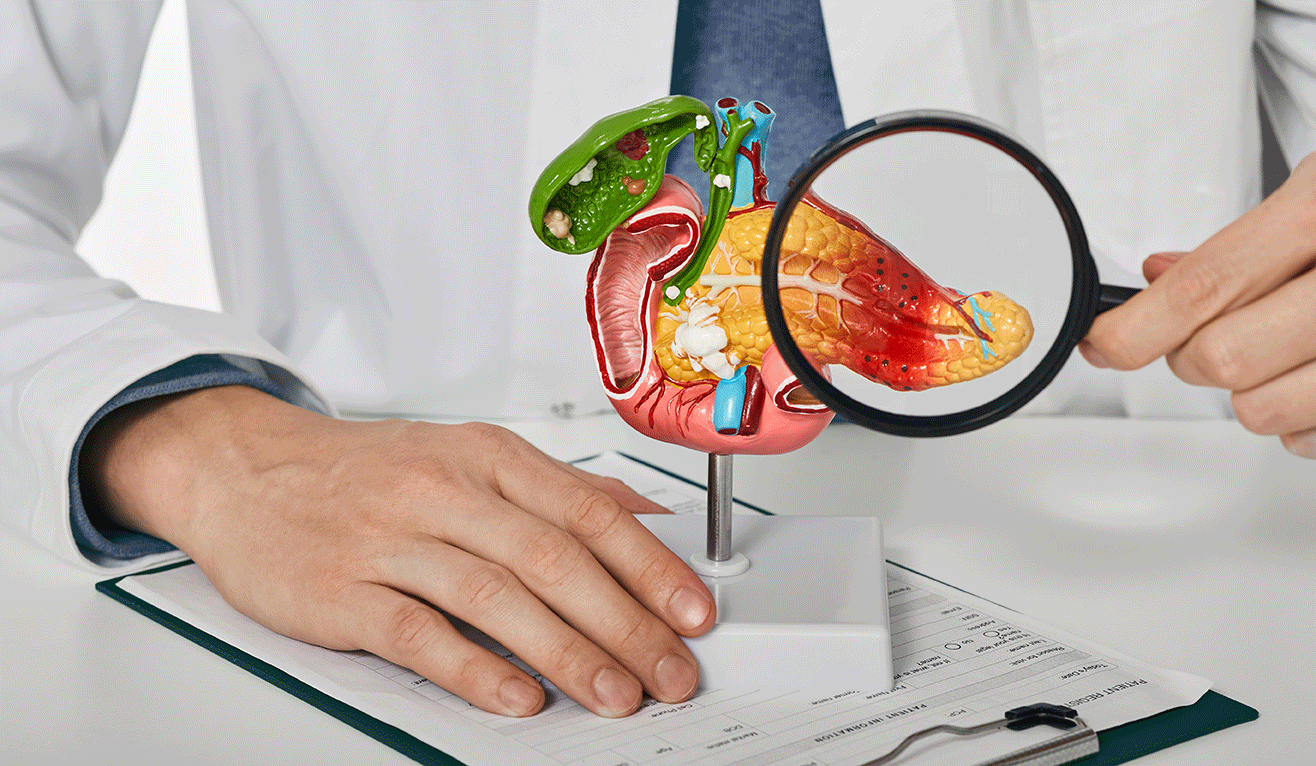
What Are Pancreatic Cysts?
Pancreatic cysts are fluid-filled sacs that develop within or on the pancreas, an organ responsible for producing digestive enzymes and regulating blood sugar levels. They are commonly detected incidentally during imaging scans such as CT or MRI, often in individuals undergoing evaluation for unrelated conditions.
These cysts can form for different reasons. Some arise from inflammation, such as after pancreatitis, while others develop from changes in the pancreatic ducts or the cells lining them.
What Could Pancreatic Cysts Signify?
Pancreatic cysts can be caused by multiple types of conditions, and upon detection,
further evaluation will likely be necessary to determine the cause.
Benign and Non-Cancerous Cyst Formation
Many pancreatic cysts are entirely benign and do not pose a long-term health risk. These
cysts often remain unchanged over time and do not cause symptoms, which is why they are
frequently discovered incidentally during scans. In such cases, doctors may recommend
periodic monitoring to ensure there are no changes, but no immediate treatment or
removal is typically needed.
Pseudocysts From Previous Inflammation
Some pancreatic cysts form as a result of pancreatitis (inflammation of the pancreas).
These are known as pseudocysts, which are when fluid collects in or around the pancreas
during the healing process. While these types of cysts are not cancerous, larger or
symptomatic pseudocysts may require medical attention if they cause pain, infection or
compression of nearby organs and structures.
Precancerous Cystic Lesions
Certain types of pancreatic cysts have the potential to develop into pancreatic cancer
over time. These are considered precancerous and are usually identified based on
specific features seen on imaging. These types of cysts are typically monitored closely
to detect any changes early, and to guide timely intervention if needed.
Cystic Tumours of the Pancreas
In some cases, a pancreatic cyst may be associated with a tumour, which can be benign,
borderline or malignant. These cystic tumours often require more detailed evaluation,
including advanced imaging or further tests, to determine their nature.
How Are Pancreatic Cysts Diagnosed and Evaluated?
Once a cyst is detected, further evaluation is important to determine its type,
characteristics and potential clinical significance.
To better assess the cyst, doctors rely on detailed imaging techniques such as CT scans or
MRIs. Doctors may also use endoscopic ultrasound for direct sampling of cyst fluid for
laboratory testing. This fluid can be analysed for tumour markers, enzyme levels and
cellular changes, helping to distinguish between benign, precancerous and cancerous cysts.
Doctors may visually differentiate between cyst types by carefully analysing specific
features captured by the imaging tests. Factors such as the size of the cyst, the thickness
of its walls, the presence of internal nodules, and whether it connects to the pancreatic
ducts all provide important clues. For example, simple benign cysts tend to have thin walls
and clear fluid, while cysts with solid components or irregular features may raise concern.
In addition to imaging and fluid analysis, doctors will evaluate a patient’s medical
history, present symptoms and potential risk factors. Certain features related to the
pancreas, such as rapid growth, the presence of nodules, or dilation of the pancreatic duct,
may indicate a higher risk and prompt further investigation or treatment.
By combining the findings obtained during an evaluation, doctors can accurately classify
pancreatic cysts and identify whether they are benign, or may require further treatment.
Treatment and Monitoring Options for Pancreatic Cysts
Treatment and monitoring of pancreatic cysts depends on the type of cyst and the impact
caused by its ongoing presence.
Active Surveillance for Low-Risk Cysts
For many low-risk or benign cysts, active surveillance is recommended. This involves regular
follow-up with imaging such as MRI or CT scans to monitor for any changes in size or
structure over time.
Minimally Invasive Treatment Options
If a cyst shows features that suggest a higher risk, such as growth, the presence of solid
components or involvement of the pancreatic duct, a surgeon may determine that treatment is
necessary. In some cases, minimally invasive procedures such as endoscopic drainage may be
used, particularly for symptomatic pseudocysts. These approaches aim to relieve symptoms or
manage complications without the need for major surgery.
Surgical Management for Concerning Cysts
Surgical removal may be considered for cysts that are suspected to be precancerous or
cancerous, or those causing significant symptoms. The decision for surgery takes into
account factors such as the patient’s overall health, the location of the cyst and the
potential benefits versus risks of the procedure.
In these cases, a Hepatopancreatobiliary surgeon will assess the findings in detail and
recommend the most appropriate surgical approach. This may involve removing part of the
pancreas or the cyst itself, with the goal of preventing progression while preserving as
much normal pancreatic function as possible.


![A scan [1.1]being conducted on the pancreas](https://www.surgicalassociates.sg/dist/images/pancreatic-cysts-found-on-scans-and-what-they-usually-mean.png)